
Bicycle Bottom Bracket Categories
2025-03-15
Bicycle Bottom Bracket Categories
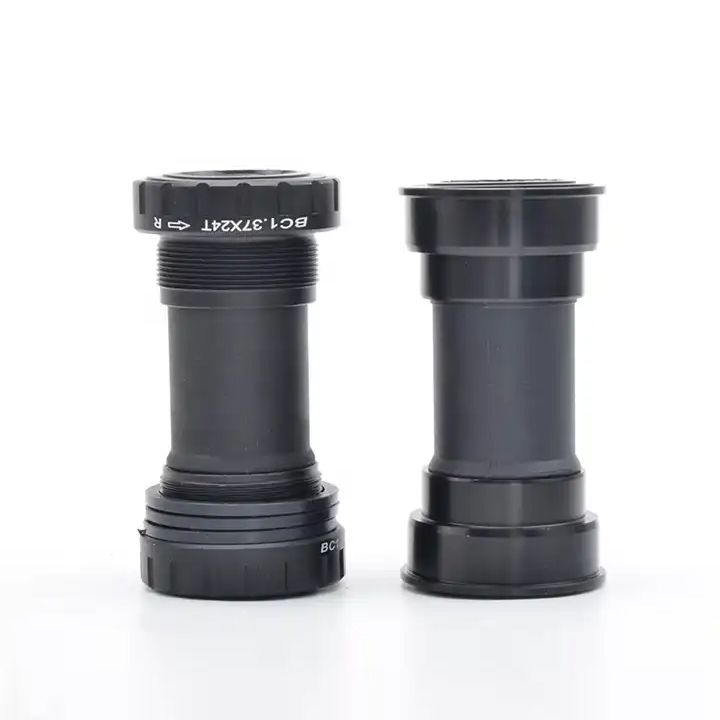
- Press - Fit Bottom Bracket: This type of bottom bracket is directly pressed into the bottom bracket shell of the frame without the need for additional threaded installation. Its advantages are that the frame design is more concise, which can reduce weight, and due to the large contact area between the bottom bracket and the frame, it can provide better rigidity. However, the Press - Fit bottom bracket has extremely high requirements for the accuracy of the bottom bracket shell of the frame. If it is installed improperly, problems such as bottom bracket loosening and abnormal noise are likely to occur. It is commonly found in some road bikes that pursue light weight and a simple appearance, as well as in the frames of some mountain bikes.
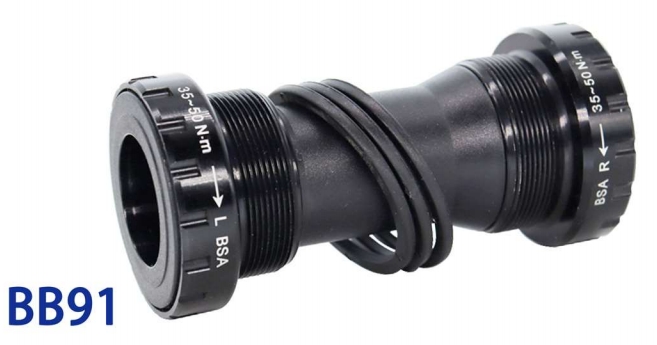
- Threaded Bottom Bracket: It is screwed into the bottom bracket shell of the frame through threads, making installation and disassembly relatively convenient. The Threaded bottom bracket has good versatility. As long as the thread specifications of different brands and models of frames match, the corresponding bottom bracket can be installed. Moreover, its installation stability is high, and it is not easy to loosen. The disadvantage is that compared with the Press - Fit bottom bracket, it may add some weight to the frame design. And due to the presence of threads, attention needs to be paid to the cleaning and lubrication of the threads during installation to prevent problems such as stripped threads. It is widely used in traditional bicycles and some models with high requirements for durability and versatility.
- Out - Board Bottom Bracket: The bearings of the Out - Board bottom bracket are installed on the outside of the bottom bracket shell of the frame, away from the center line of the frame. This design makes the installation position of the crankset wider, which can increase the pedaling rigidity of the bicycle and improve the power transmission efficiency. It is especially suitable for riding scenarios that require strong pedaling, such as mountain bike climbing and road bike sprinting. However, since the bearings of the Out - Board bottom bracket are exposed on the outside, they are more likely to be eroded by external impurities such as dust and mud, and require more frequent maintenance. At the same time, its special design may also increase the complexity of frame design and manufacturing.
Classification by Axle Specification
- Common - Sized Axle: Common axle diameters are 68mm, 73mm, etc., which are suitable for most standard bicycle frames. Axles of this specification have rich accessories in the market and strong versatility. Whether it is a common leisure bicycle, urban commuter bike, or some entry - level road bikes and mountain bikes, bottom brackets with common - sized axles are widely used.
- Over - Sized Axle: In order to further improve the rigidity and strength of the bottom bracket, some high - end bicycles adopt the Over - Sized Axle design, such as 83mm, 100mm, etc. The Over - Sized Axle can better withstand the huge force from pedaling and reduce the deformation of the axle, thus improving the overall performance of the bicycle. Especially in professional competition - level bicycles, bottom brackets with Over - Sized Axles are becoming more and more common to meet the riders' pursuit of extreme performance. However, bottom brackets with Over - Sized Axles often require specifically designed frames and cranksets to match, with relatively fewer accessory options and higher costs.
Classification by Bearing Type
- Ball Bearing Bottom Bracket: The Ball Bearing bottom bracket uses balls as rolling elements. When the bottom bracket is in operation, the balls roll between the inner and outer rings to reduce friction. The advantages of ball bearings are low cost, relatively simple structure, and easy maintenance. Ball Bearing bottom brackets are widely used in some mid - to - low - end bicycles. However, its disadvantage is that the rolling resistance is relatively large. When running at high speed, the friction between the balls may generate certain heat, affecting the efficiency and service life of the bottom bracket.
- Cartridge Bearing Bottom Bracket: Cartridge bearings, also known as sealed bearings, are pre - assembled in a sealed housing. This type of bearing has better sealing performance, which can effectively prevent impurities such as dust and moisture from entering, thus extending the service life of the bearing. Cartridge bearings have low rolling resistance and rotate more smoothly, which can provide higher transmission efficiency. In high - end bicycles and models with high performance requirements, Cartridge Bearing bottom brackets are widely used. However, the manufacturing cost of Cartridge Bearing bottom brackets is relatively high. Once the bearing has a problem, the cost of replacing the entire cartridge unit is also higher than that of ball bearings.
How the Bottom Bracket Transforms the Cycling Experience
Ride Upgrade: Unlocking the Charm of Core Bicycle Components