
Bicycle Chairning
2025-04-07

1. Structure and composition of the chainring
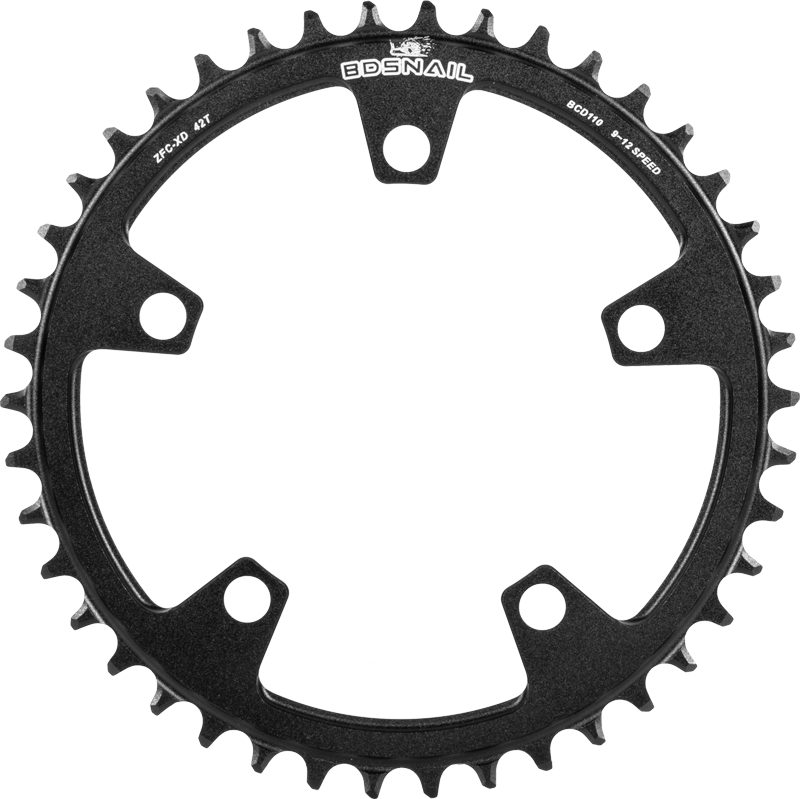
Disc: The chainring consists of multiple teeth, and the shape, size and spacing of the teeth are carefully designed. The sharp teeth of the road bike chainring are conducive to close engagement with the chain during high-speed riding and efficient power transmission; the mountain bike chainring teeth are thicker to cope with the high torque requirements under complex terrain. The chainring material is diverse, and the most common ones are aluminum alloy and carbon fiber. Aluminum alloy chainrings have good strength and high cost performance, which are suitable for most riding scenarios; carbon fiber chainrings are lighter, can reduce the weight of the whole vehicle, provide good rigidity, and are suitable for riders who pursue extreme performance.
Crank: The crank connects the chainring and the bottom axis, and is the part where the rider applies force. Its length affects the riding force effect. Longer cranks are suitable for riders with strong leg strength, and are superior in situations where large torque output is required, such as climbing; shorter cranks are conducive to high-speed riding, suitable for sprinting and pursuing speed on flat roads. The crank is made of aluminum alloy, carbon fiber, etc. High-quality materials must ensure sufficient strength to withstand the rider's power, and also have good rigidity to prevent excessive bending and deformation when pedaling vigorously.
2. Working principle of the chainring
When the rider steps on the pedal, the force is transmitted to the plate through the crank, the plate drives the chain to move, and the chain then transmits the power to the flywheel, which finally drives the rear wheel to rotate and make the bicycle move forward. In this process, the ratio of the number of teeth on the chainring to the number of teeth on the flywheel (transmission ratio) determines the speed and torque of the bicycle. For example, a larger number of teeth on the chainring with a smaller number of teeth on the flywheel produces a larger transmission ratio, which is suitable for high-speed riding on flat roads; a smaller number of teeth on the chainring with a larger number of teeth on the flywheel can provide greater torque and facilitate climbing.
3. Types of chainrings
Double-plate system: Commonly found in road bikes and some mountain bikes, it consists of two plates of different sizes. Riders can switch between the two plates through the front derailleur according to road conditions and riding needs. The double-disc system strikes a good balance between weight and speed range, which can meet the speed requirements of road riding and cope with certain slope changes.
Triple-disc system: Mainly used in mountain bikes, especially complex mountain cross-country models. It has three discs of different sizes, providing a wider speed range. Riders can easily switch the appropriate transmission ratio when climbing, descending and riding on flat ground, adapting to various terrains and riding conditions.
Single-disc system: It is becoming more and more popular in modern bicycles. The system has a simple structure and light weight, reducing the risk of failure caused by components such as the front derailleur. It is suitable for the pursuit of a simple and efficient riding style. In mountain bike endurance races or urban commuter bicycles, the single-disc system can provide sufficient speed range.
IV. Maintenance and maintenance of the chainring
Cleaning: Regular cleaning of the chainring is the key to maintaining its performance. During riding, the chainring will be stained with dust, dirt and oil. You can use a special bicycle cleaner and a soft cloth to gently wipe the disc and crank to remove dirt. Pay special attention to cleaning between the teeth to avoid dirt affecting the bite of the chain and the chainring.
Check wear: Check the wear of the chainring frequently. If the teeth of the chainring are severely worn, the chainring will slip and affect power transmission. The degree of wear can be judged by observing whether the shape of the teeth is round and whether the tooth surface is smooth. Once excessive wear is found, the chainring should be replaced in time.
Lubrication: Proper lubrication can reduce the friction between the chainring and the chain and improve transmission efficiency. Use high-quality bicycle lubricant, drop a small amount of lubricant on the contact area between the chain and the chainring, and rotate the chainring to evenly distribute the lubricant. But be careful to avoid over-lubrication to avoid excessive dust.
Selection and upgrade of chainrings
Choose according to riding needs: Road bike enthusiasts mainly pursue speed on flat roads. They can choose chainrings with larger teeth and thinner plates to obtain higher transmission ratios. Frequent mountain biking requires dealing with complex terrain. A three-plate system or a single-plate system with a wide range of teeth may be more suitable.
Consider compatibility with other components: The selection of chainrings should consider compatibility with other parts of the bicycle, such as the specifications of the middle axis and the width of the chain. Make sure the selected chainring is a perfect match for the entire vehicle drivetrain, otherwise there may be installation problems or affect riding performance.
The significance of upgrading the chainring: For riders who pursue high performance, upgrading the chainring is an effective way to improve the overall performance of the bicycle. A lighter and more rigid chainring can improve the efficiency of power transmission, allowing each pedaling to be more effectively converted into forward momentum.
Bicycle Crankset
Fixed Gear vs Single Speed