
The use of bicycle discs
2025-03-13

The bicycle disc is a crucial component in the bicycle braking system, and it mainly serves the following purposes:
- Efficient Braking: The disc works in conjunction with the brake caliper. When the brakes are applied, the pistons in the caliper push the brake pads to firmly grip the disc. Through the huge frictional force, the disc can be quickly stopped from rotating, thus stopping the wheel and achieving braking. Compared with traditional braking systems such as V-brakes, disc braking can provide more powerful and stable braking force, enabling the bicycle to decelerate or stop in a short time, effectively ensuring riding safety. Especially when riding at high speeds or going downhill, it allows riders to have more confidence in controlling the speed.
- Stable and Reliable: The disc braking system is less affected by environmental factors. Whether it is in a rainy and wet day or on a dusty road condition, the disc can maintain relatively stable braking performance. This is because the disc is installed on the hub, away from the ground, mud and water, and is not easily soiled or wet. Moreover, the material and design of the disc endow it with good corrosion resistance and wear resistance, enabling it to work stably for a long time and reducing potential safety hazards caused by braking system failures.
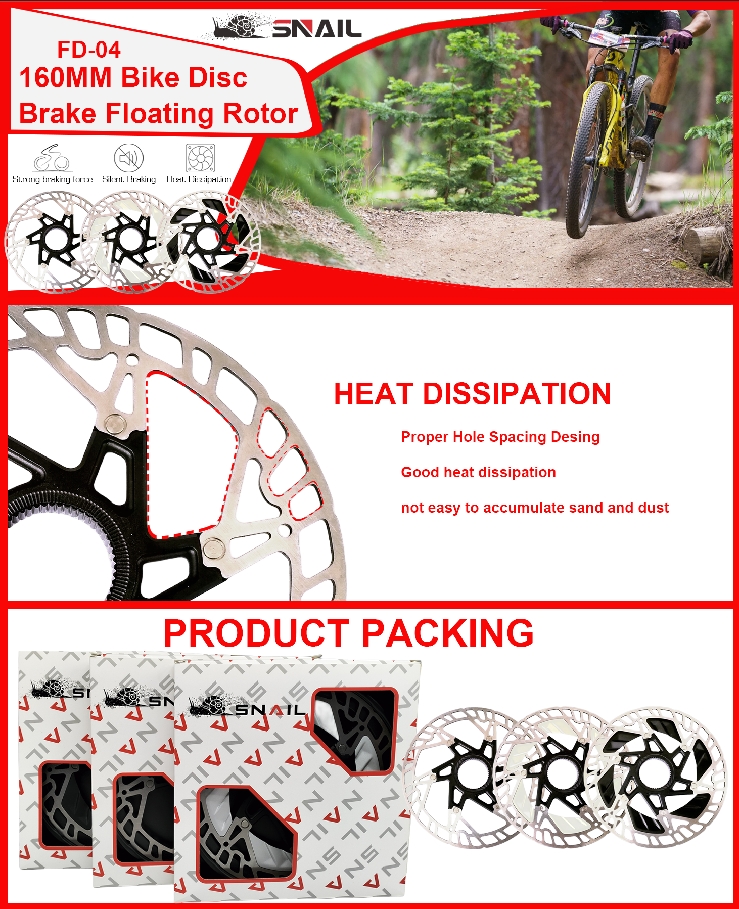
- Precise Control: Disc braking allows for more precise control of the braking force. Riders can accurately adjust the pressure of the brake pads on the disc by gently squeezing the brake lever according to the actual situation, thus achieving different degrees of braking effects. Whether it is a slight deceleration or an emergency stop, they can control it accurately. This precise control is particularly important in some complex road conditions, such as narrow mountain roads and crowded streets, and it can help riders flexibly deal with various unexpected situations.
- Good Heat Dissipation Performance: During frequent braking or long downhill braking, the disc will generate a large amount of heat due to friction. The disc usually adopts special materials and designs, which have good heat dissipation performance and can quickly dissipate heat into the air, avoiding a decline in braking performance caused by overheating. This characteristic ensures that the disc can still maintain good braking effect during continuous braking, preventing the occurrence of thermal decay and ensuring riding safety.
The Charm of Bicycle Discs: Safety Guarantees in Cycling
Origin of track cycling