
How To Choose Your Bicycle Chainring
2025-03-22
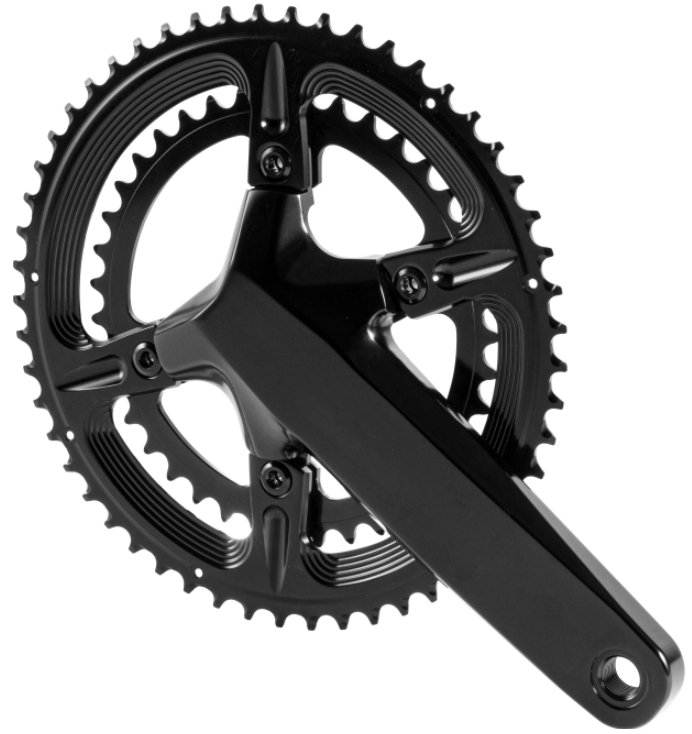
When selecting a bicycle chainring that suits you, you can consider the following aspects:
- Riding Requirements
- Climbing:If you often ride on hilly terrain, a chainring with a high gear ratio and a small chainring is a wise choice. For example, the common single - chainrings for mountain bikes, such as 34T and 36T, or the 50 - 34T compact double - chainring system for road bikes, can reduce the pedaling effort during climbing and make riding easier.
- Flat Roads:If you prefer riding on flat roads or aim for high - speed cycling, a chainring with a low gear ratio and a large chainring is more suitable. For instance, the 53 - tooth (or 52 - tooth) large chainring of a standard road bike chainring can help increase the riding speed on flat sections.
- Material Considerations
- Alloy Material:Alloy chainrings are high in strength, durable, and relatively affordable, making them a common choice for most cycling enthusiasts.
- Carbon Fiber Material:It features lightweight and excellent shock - absorbing properties, which can effectively enhance riding comfort. However, it comes at a higher cost and is relatively more prone to damage in case of a collision.
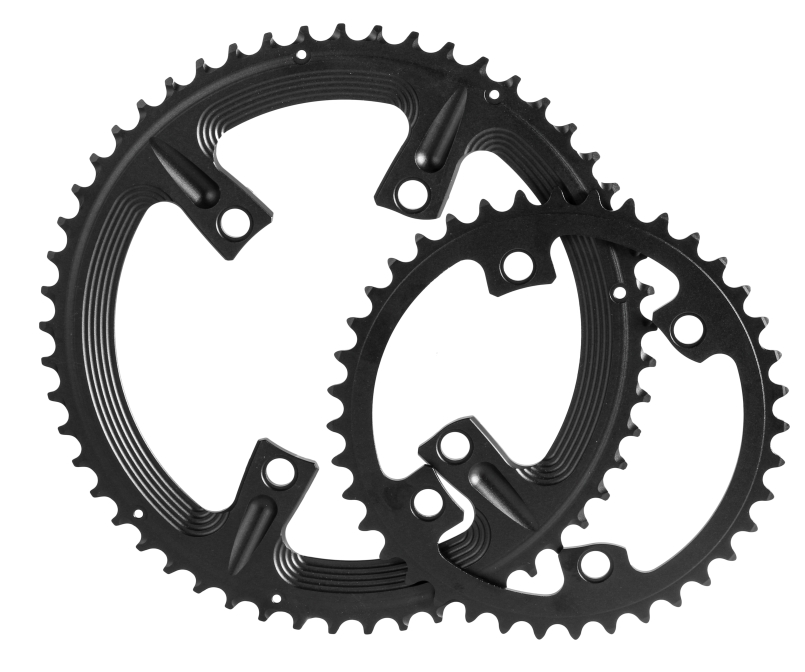
- Personal Physical Conditions
- Height Factor:Taller riders can consider larger - sized chainrings, while shorter riders are better suited to smaller - sized chainrings to ensure a comfortable and efficient pedaling motion.
- Riding Habits:For riders who are accustomed to quick gear shifting, a lightweight and easy - to - operate chainring would be a better option.
- Number of Chainrings
- Single - Chainring Design:The single - chainring has a simple structure and is easy to maintain. Without a complex front derailleur, it can reduce the probability of chain - derailleur friction. This design is suitable for riders who don't mind pushing the bike in extreme situations or have access to cable cars for going up and down the mountain, and who pursue transmission reliability. It is quite popular in some mountain - biking off - road scenarios.
- Double - Chainring Combination:Common configurations for road bikes, such as the compact chainring (50T large chainring and 34T small chainring) and the semi - compact chainring (52T outer sprocket and 36T inner sprocket), belong to the double - chainring setup. The double - chainring system can handle a variety of road conditions and has a wide range of applications.
- Triple - Chainring Configuration:The triple - chainring was once a common configuration for mountain bikes and had a large gear - shifting ratio range, such as the 44, 32, and 22 - tooth combination in old - fashioned mountain bikes. However, due to its increased weight and potential mechanical failure risks, its usage has gradually decreased nowadays.
- Budget and Preferences:There are significant price differences among chainrings of different brands and models. Based on meeting your basic riding needs, you can make a choice according to your budget. Meanwhile, choosing a chainring with an appearance and brand you like can also add more fun to your cycling experience.
In addition, when replacing a chainring, make sure that the bolt - circle diameter (BCD) and bolt spacing of the new chainring match those of the existing crankset, and adjust the position of the front derailleur and the length of the chain accordingly to ensure the normal operation of the transmission system.
How to choose a MTB
How to choose a road bike