
How to Choose a Bicycle Crankset
2025-03-01
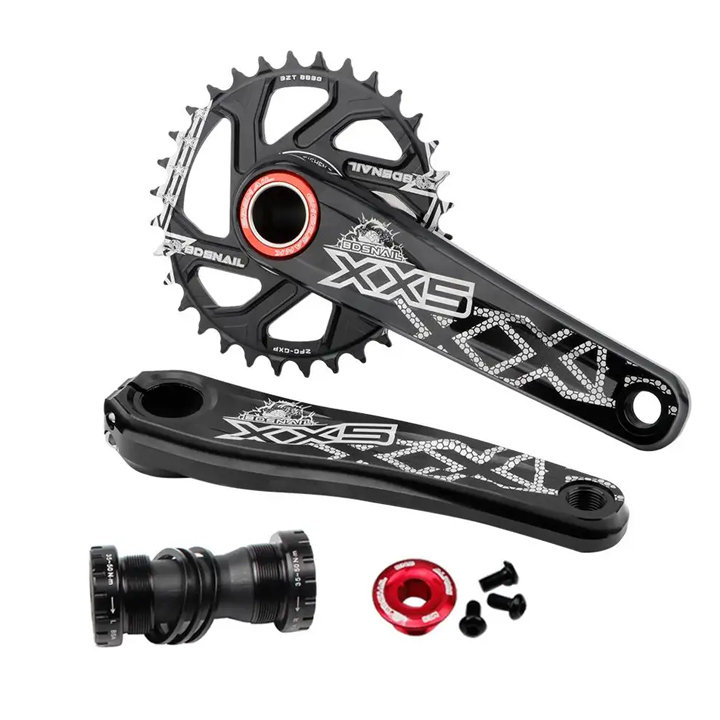
How to Choose a Bicycle Crankset
When choosing a bicycle crankset, multiple factors need to be considered. Here are some key points:
Material
- Aluminum alloy: It is relatively light in weight, has high strength, and good corrosion resistance. The price is relatively moderate, making it a common material for cranksets on the market. It is suitable for most daily riders and recreational cycling enthusiasts.
- Carbon fiber: It is extremely light in weight, which can effectively reduce the overall weight of the bicycle. At the same time, it has excellent rigidity, which can efficiently transfer the rider's pedaling force to the wheels, improving the riding efficiency. However, carbon fiber cranksets are relatively expensive, and they may suffer irreparable damage when subjected to a large external impact.
- Steel: It has high strength and good toughness, and can withstand a large amount of force. It is suitable for some bicycles that require high load capacity, such as cargo bicycles or some high-intensity cycling projects. But the disadvantage is that it is heavy, which will increase the overall burden of the bicycle.
Length
- Rider's height: Generally speaking, taller riders are suitable for longer cranksets, while shorter riders are more suitable for shorter ones. For example, riders with a height of less than 165 cm can usually choose cranksets with a length of 170 mm or 172.5 mm; for those with a height between 165-180 cm, 172.5 mm or 175 mm cranksets are more appropriate; for riders taller than 180 cm, cranksets with a length of 175 mm or longer may be more comfortable.
- Riding style: For riders who focus on climbing, shorter cranksets may be more conducive to increasing the pedaling frequency and improving the climbing efficiency. For riders who pursue high-speed cruising, longer cranksets can generate greater torque during pedaling, which helps to increase the speed.
Compatibility
- Bottom bracket type: Different bottom bracket types require matching cranksets. Common bottom bracket types include press-fit type, threaded type, etc. For example, if you are using a press-fit bottom bracket, then you need to choose a crankset that is compatible with the press-fit bottom bracket.
- Chainring specification: The installation method and specification of the crankset should match that of the chainring. The common specification is BCD (Bolt Circle Diameter), such as 110 mm, 130 mm, etc. You need to choose a suitable crankset according to the BCD specification of the chainring you choose.
Budget
- Entry-level: The price is usually between a few hundred yuan and more than one thousand yuan. Such cranksets generally use aluminum alloy materials and can meet the basic needs of daily riding, which is suitable for beginners with a limited budget.
- Mid-to-high-end: The price is around two thousand yuan to five thousand yuan. It may use more advanced aluminum alloy materials or carbon fiber materials, and has better performance in terms of weight, rigidity, and craftsmanship. It is suitable for cycling enthusiasts who have certain requirements for bicycle performance.
- High-end competition level: The price is often more than five thousand yuan. It usually uses top-grade carbon fiber materials, and is designed and manufactured with great precision, with extreme light weight and rigidity. It is mainly aimed at professional competition riders.
Brand and Quality
- Well-known brands: Such as Shimano, SRAM, Campagnolo, etc. These brands have rich experience and a good reputation in the bicycle field. The product quality is guaranteed, and they provide comprehensive after-sales service. Their cranksets are at the leading level in the industry in terms of design, manufacturing process, and performance.
- Product reviews: You can check the user reviews on online bicycle forums and e-commerce platforms to understand the usage feelings and feedback of other riders on different brands and models of cranksets, so as to better judge the quality and performance of the products.
Encountering Fixed - Gear Bikes, Meeting Unruly Freedom
Above the Crankset: Redefining Your Cycling DNA