
Bicycle Crankset
2025-04-07

1. The important position of the crank
In the complex transmission system of the bicycle, the crank is like an important connection hub between the heart and the limbs. When you step on the bicycle and step on the pedals with both feet, the power is transmitted through the crank, which drives the chainring to rotate, and finally drives the chain and the rear wheel, allowing the bicycle to fly forward. It can be said that without the efficient transmission of the crank, the rider's power cannot be smoothly converted into the forward power of the bicycle, and riding is out of the question.
In the complex transmission system of the bicycle, the crank is like an important connection hub between the heart and the limbs. When you step on the bicycle and step on the pedals with both feet, the power is transmitted through the crank, which drives the chainring to rotate, and finally drives the chain and the rear wheel, allowing the bicycle to fly forward. It can be said that without the efficient transmission of the crank, the rider's power cannot be smoothly converted into the forward power of the bicycle, and riding is out of the question.
2. Structural analysis of the crank
Main part: The main body of the crank is a long rod structure connecting the pedal and the middle axis, and its shape is not a simple straight rod. Ergonomic design is integrated into it in order to fit the movement trajectory of the rider when pedaling and reduce unnecessary energy loss. The common crank body is made of aluminum alloy. This material effectively reduces the weight while ensuring sufficient strength, making riding lighter. Among high-end products, carbon fiber cranks are becoming more and more popular. Their excellent rigidity and lightweight characteristics can bring better power feedback to riders who pursue extreme performance.
Installation interface: One end is connected to the pedal, and a standard threaded interface is used to ensure that the pedal is firmly installed and will not loosen during riding. The accuracy of the interface is crucial. A high-precision interface can make the pedal and the crank tightly combined, and the force is smoother. The other end is connected to the middle axis. Different types of bicycles and middle axis systems correspond to different installation methods, such as the common spline interface and square hole interface. These interface designs are designed to achieve efficient power transmission between the crank and the middle axis and ensure the stability of the entire transmission system.
3. The mystery of crank length
Impact on riding: The seemingly subtle difference in crank length can have a significant impact on riding. Longer cranks can produce greater leverage when pedaling, which means that in scenarios such as climbing that require large torque output, riders can more easily exert force and transfer more power to the chainring. But longer cranks will also increase the circumferential distance of pedaling, which may make riders feel strenuous when riding at high speeds. On the contrary, shorter cranks are suitable for scenes that pursue high-speed riding, such as sprinting on a flat road. It allows riders to turn the pedals faster, increase the pedaling frequency, and thus increase the riding speed. However, when facing steep slopes, shorter cranks may make riders feel that they are not exerting enough force.
How to choose the right length: Choosing the right crank length requires comprehensive consideration of the rider's height, leg length, and riding habits. Generally speaking, riders with taller height and longer legs are suitable for longer cranks, which can give full play to their leg strength advantages. Riders with shorter height and who like to pedal at a high frequency are more suitable for shorter cranks. The common crank length range on the market is between 165mm and 175mm. Riders can test ride cranks of different lengths to feel which length is most suitable for their riding style.
4. Main points for crank maintenance
Regular cleaning: During riding, the cranks will inevitably be stained with dirt such as dust, mud, and oil. These dirt not only affect the appearance of the cranks, but may also penetrate into various interface parts and increase wear. Wipe the surface of the cranks regularly with a clean damp cloth. For oil stains that are difficult to remove, special bicycle cleaners can be used. When cleaning, be careful not to let moisture enter key parts such as the middle axis to avoid rust and corrosion.
Check the tightness: Before each ride, check whether the connection between the crank, pedal and middle axis is tight. You can use a wrench to gently twist to ensure that the screws are not loose. Loose cranks will not only affect the comfort of riding, but may also cause serious safety hazards. During riding, if you feel abnormal shaking or jamming of the pedals, you should stop immediately to check the tightness of the cranks.
Lubrication maintenance: In order to reduce the friction of the cranks during rotation, they need to be lubricated regularly. Apply an appropriate amount of grease to the connection between the crank and the middle axis, and the rotating parts of the pedals and cranks. High-quality grease can effectively reduce the friction coefficient and extend the service life of the cranks. At the same time, it can also allow riders to feel smoother power transmission when pedaling.
V. The upgrade value of the cranks
Performance improvement: For enthusiasts who pursue higher riding performance, upgrading the cranks is a good choice. Upgrading to a lighter, stiffer crank can reduce energy loss and transfer the rider's pedaling power more directly to the chainring, making riding more efficient. This performance improvement can be a significant advantage in a race or long ride.
Personalized customization: Different brands and styles of cranks have unique designs and looks. By upgrading the cranks, riders can create a unique style for their bikes based on their preferences. Whether it's pursuing fashion trends or showing personal taste, upgrading the cranks can meet the personalized needs of riders.
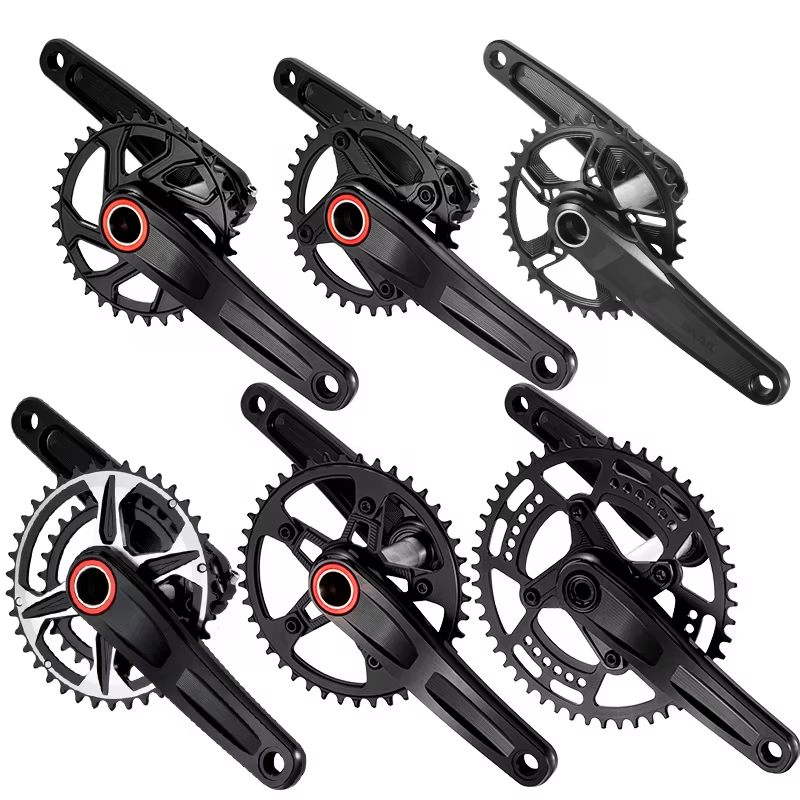
New Stytle Chainring
Bicycle Chairning