
Bicycle Brake Rotor Disc
2025-03-24
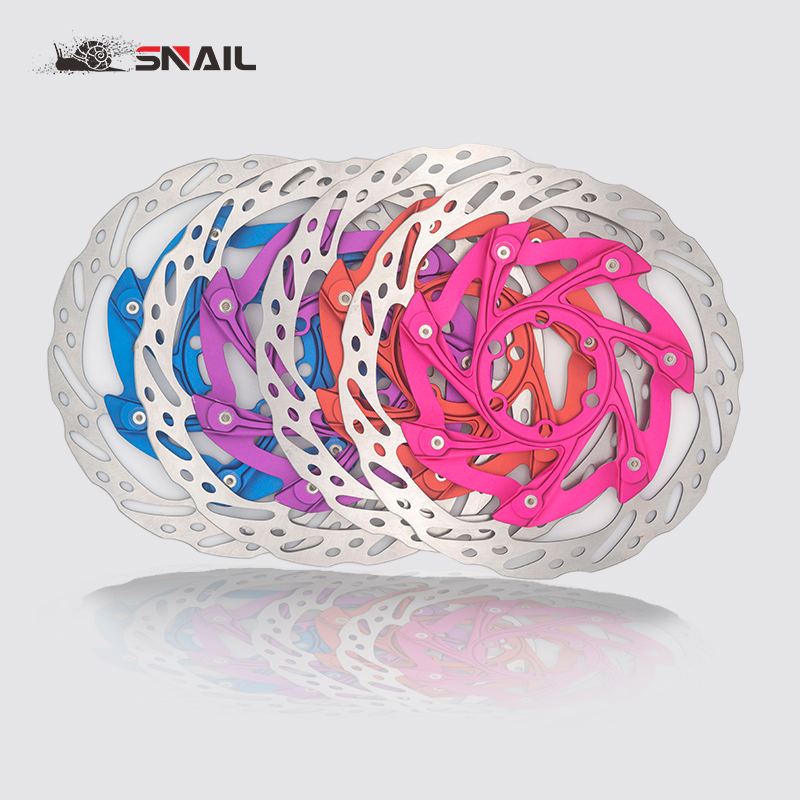
Bicycle Discs: The Invisible Guardians of Cycling
Among the numerous components of a bicycle, the disc may not be the most eye - catching, but it silently ensures the safety and smoothness of every ride during braking. Today, let's take an in - depth look at this crucial component.
The Working Principle of Discs
The disc in a disc - brake system rotates synchronously with the wheel. When braking, the brake pads in the caliper firmly clamp the disc, and the rotation of the wheel is slowed down through friction, thus achieving the purpose of braking. Its principle is not complex, yet it contains exquisite mechanical design. Compared with traditional drum brakes, disc brakes have obvious advantages in heat dissipation and braking efficiency.
Diverse Classifications
Classification by Material
- Stainless Steel Discs: This is the most common material, with excellent durability and stability. Discs made of high - quality stainless steel have a strong braking surface, can withstand frequent braking operations, and are not affected by the weather. They can work stably in both rainy and sunny days. The hollow design on the disc surface not only helps water, mud, and small debris to fall off quickly but also achieves weight reduction to a certain extent.
- Aluminum Alloy Discs: Some manufacturers launch aluminum alloy discs, which are concerned for their good heat dissipation performance. During long - time braking, aluminum alloy can dissipate heat more quickly, reducing the risk of heat fade and thus improving braking stability. However, aluminum alloy discs may be slightly inferior to stainless steel in terms of strength.
- Discs of Other Materials: There are also some high - end discs made of materials such as titanium or carbon. Titanium - material discs have both high strength and lightweight characteristics, while carbon - material discs are excellent in lightweight and also have a unique appearance texture. Of course, the price is relatively high.
Classification by Mounting Method
- Center - Lock Discs: The center - lock system fixes the disc to the hub through a central lock ring, which is relatively convenient for installation and disassembly. This mounting method makes the installation of the disc more stable. During high - speed riding and intense braking operations, it can maintain good concentricity, reduce disc wobbling, and improve braking performance.
- Six - Bolt Discs: Six - bolt discs are connected to the hub through six screws, with a simple structure and light weight. Its mounting method is relatively traditional and has strong versatility. Even if the disc needs to be replaced during outdoor riding, it is relatively easy to find suitable screws and tools.
The Mystery of Disc Sizes
Discs come in a variety of sizes, and different sizes are suitable for different riding scenarios and needs.
- Disc Sizes for Road Bikes: Generally, road bikes and cyclocross bikes commonly use discs with a diameter of 140 - 160 mm. This size range can provide sufficient braking force to meet the braking needs of road riding and maintain the light weight of the vehicle without affecting the riding speed and flexibility.
- Disc Sizes for Mountain Bikes: The riding environment of mountain bikes is complex, and higher requirements are placed on braking performance. Usually, discs with a diameter of 180 - 220 mm are used. Many mountain bikes also adopt a "front - large - rear - small" configuration, for example, the front wheel uses a 200 - mm disc and the rear wheel uses a 180 - mm disc. Such a configuration can better cope with the greater pressure on the front wheel when going downhill and take into account the flexible control of the rear wheel at the same time.
- Disc Sizes for Special Models: Downhill bikes need to provide strong braking force when going downhill at high speed, so discs with a diameter of more than 200 mm are used. For electric assist bikes, considering their relatively high riding speed and heavy body, larger - sized discs are also mostly used to ensure braking safety.
The Exquisite Heat Dissipation Design
During the braking process, the disc generates a large amount of heat due to friction. If the heat cannot be dissipated in time, the braking performance will decline, and even heat fade may occur. Therefore, the heat dissipation design of the disc is of great importance.
- Hollow Design: Many discs have elaborately designed hollow patterns on their surfaces. These holes can not only reduce the weight of the disc but also increase air circulation and accelerate heat dissipation. During riding, air flows quickly through these holes over the disc surface, taking away heat and effectively reducing the disc temperature.
- Application of Special Materials: Some high - end discs use special heat - dissipation materials. For example, some discs are coated with heat - dissipation materials on the inner ring, which can better absorb and conduct heat. There are also discs with a design of connecting a stainless - steel outer ring and an aluminum - alloy inner ring, using the good thermal conductivity of aluminum alloy to accelerate heat dissipation while maintaining the overall strength of the disc. Shimano's IceTech technology sandwiches an aluminum thin layer between two stainless - steel layers, greatly improving the heat dissipation efficiency of the disc.
How to Choose the Right Disc for Yourself
- Consider the Riding Scenario: If you mainly ride on the road and pursue speed and light weight, then a 140 - 160 - mm center - lock or six - bolt stainless - steel disc may be a good choice. For mountain - riding enthusiasts, especially those who often engage in off - road and downhill riding, large - sized discs with good heat - dissipation performance are more suitable.
- Combine with the Budget: Discs of different materials and brands have large price differences. When choosing, you should decide according to your financial strength. If the budget is limited, high - quality stainless - steel discs can fully meet the daily riding needs. If you pursue extreme performance and light weight, titanium or carbon - material discs are better choices, but the price is relatively high.
- Pay Attention to the Brand and Quality: Choosing discs from well - known brands can ensure better quality and performance. Brand manufacturers usually invest a lot of energy in research and development and production to ensure the quality and stability of the discs. At the same time, pay attention to checking the relevant parameters and user reviews of the discs to understand their actual performance.
Although bicycle discs are small, they play a crucial role in riding safety and performance. Understanding the working principle, classification, size selection, and heat - dissipation design of discs can help us make more informed decisions when purchasing a bicycle or replacing discs. Let's pay attention to this invisible guardian and enjoy a safer and more enjoyable riding journey.
Why is Trek Butterfly so expensive?
How to choose a MTB