Carbon Fiber Chainring: A Revolution in Cycling Performance
2025-07-25

Carbon Fiber Chainring: A Revolution in Cycling Performance
Among the many parts of a bicycle, the crankset is a crucial part, which is directly related to the efficiency and experience of riding. In recent years, carbon fiber cranksets have gradually become the object of pursuit by bicycle enthusiasts due to their excellent performance.
Carbon fiber materials have long been widely used in high-end fields such as aerospace and automobile manufacturing. Now they have also emerged in the manufacturing of bicycle parts, especially in the production of cranksets. One of the most notable features of carbon fiber cranksets is their ultra-light weight. Compared with traditional aluminum alloy cranksets, carbon fiber cranksets can greatly reduce the overall weight of bicycles. For example, some high-end carbon fiber cranksets may weigh only about half of aluminum alloy cranksets. This is of great significance to riders who pursue speed and controllability. Lighter weight means that they can accelerate and climb more easily during riding, reduce physical exertion, and make riding smoother and more efficient.
In addition to being lightweight, carbon fiber cranksets also have excellent rigidity. When riding, the crankset needs to withstand huge pedaling force. The insufficiently rigid crankset is prone to deformation, resulting in power transmission loss and reduced riding efficiency. Due to its special material structure, the carbon fiber chainring can provide extremely high rigidity while ensuring light weight, ensuring that the force of each pedaling can be efficiently transmitted to the wheel and converted into forward power. This is like an athlete having stronger and more stable leg muscles, which can push the bicycle forward more powerfully.
In terms of durability, the carbon fiber chainring also performs well. Although some people are worried about whether the carbon fiber material can withstand long-term use and the test of various complex road conditions, in fact, the carefully designed and manufactured carbon fiber chainring has good fatigue resistance and corrosion resistance. It is not as easy to rust as metal materials, and can also resist external impact and wear to a certain extent, providing riders with a long-term and reliable use experience.
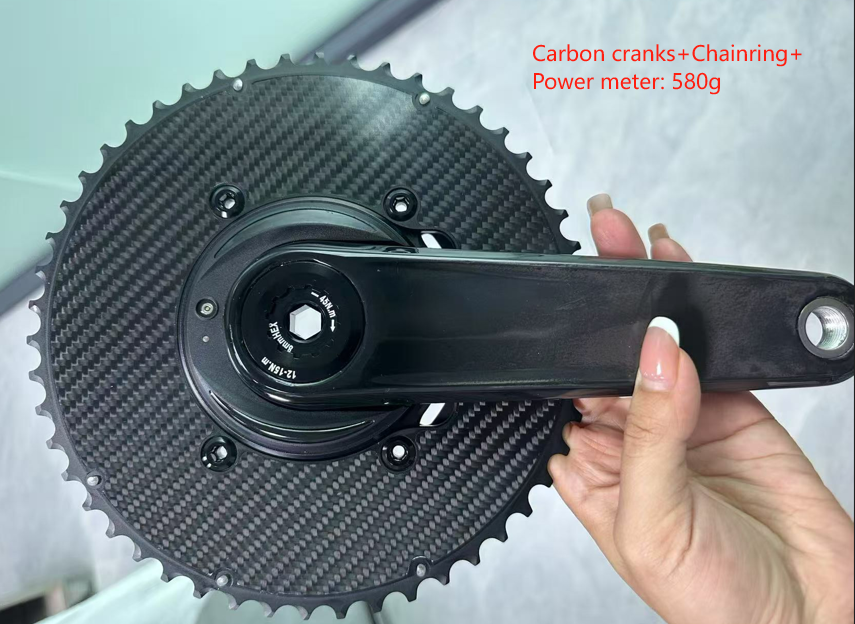
Snail newly launched carbon fiber chainring is mainly made of carbon fiber, and the contact surface between the chain and the plate teeth is made of alloy. While ensuring lightweight, the pedal load is transmitted through the aluminum plate core to avoid direct contact between the chain and the alloy, which brings long-term wear resistance. The carbon interlayer also reduces friction, avoids abnormal chain noise, and improves the overall aerodynamic performance of the transmission system.
Carbon fiber chainrings not only excel in performance, but also have unique design. Its unique carbon fiber texture gives people a high-end, technological visual experience, which can add a unique aesthetic to the bicycle and make the rider's bike stand out from the crowd.
Of course, the relatively high price of carbon fiber chainrings may discourage some cycling enthusiasts. But the performance improvement and riding experience improvement it brings are real. For professional riders and senior cycling enthusiasts who pursue extreme riding performance and love to challenge themselves, carbon fiber chainrings are undoubtedly their right-hand man to improve their riding performance. With the continuous advancement of technology and the gradual reduction of production costs, I believe that in the future, carbon fiber chainrings will become more and more popular, allowing more riders to enjoy the excellent performance and pleasant riding experience it brings. If you are still hesitating about choosing a high-performance chainring, you might as well consider a carbon fiber chainring, which may bring you unexpected surprises and start a new and more exciting cycling journey.
Who invented the bicycle?
History of the Bicycle: A timeline