
On the Cycling Road, It's Your Most Reliable "Invisible Partner"
2025-02-28
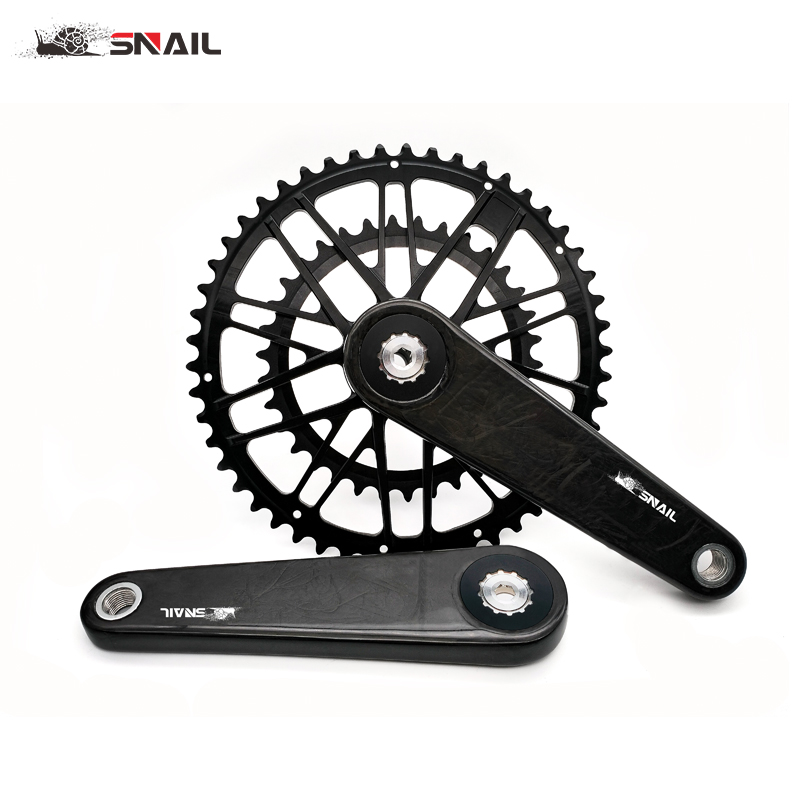
On the Cycling Road, It's Your Most Reliable "Invisible Partner"
In the world of cycling, the bicycle crank is like a silent hero behind the scenes, humble yet of vital importance. You may have focused on the cool frame and high-performance derailleur, but inadvertently overlooked this crucial component that transmits power for you.
The bicycle crank connects the pedals to the chainring and is the core hub that converts the power of our legs into the forward momentum of the bicycle. Imagine that every time you press down on the pedals with force, that power has to be accurately and efficiently transmitted through the crank for the bicycle to move forward as you wish. A high-quality crank is like equipping your ride with an efficient energy converter.
In terms of materials, high-end bicycle cranks nowadays are mostly made of aluminum alloy or carbon fiber. Aluminum alloy cranks are characterized by their light weight and high strength. They can ensure durability while reducing the weight of the whole vehicle, making it easier for you to climb hills and more agile when accelerating. Carbon fiber cranks, on the other hand, are more like the favorite of cyclists who pursue ultimate performance. Not only are they extremely lightweight, but they also have excellent rigidity. When you pedal with all your might, there is almost no excess deformation, converting every bit of your power into forward momentum without reservation, making the ride smoother and more efficient.
Let's talk about its design. Ergonomics is fully reflected in the design of the crank. A reasonable crank length can keep your legs in the most comfortable and natural movement trajectory during the pedaling process, reducing the feeling of fatigue. For example, a longer crank can provide greater torque on flat roads or during high-speed riding, helping you maintain speed more effortlessly. Shorter cranks, on the other hand, make your movements more agile in mountain biking or scenarios where frequent shifting and flexible control are required.
Moreover, the appearance design of the crank is paying more and more attention to aesthetics and individuality. It is no longer the monotonous traditional shape. Today's cranks have various unique lines and color combinations. When installed on a bicycle, they can instantly enhance the appearance of the whole vehicle and become a unique scenery on the cycling road.
When you truly gain an in-depth understanding of the bicycle crank, you will find that it is not just a mechanical component but also an important guarantee for the cycling experience. It is like a loyal partner, silently carrying your cycling dreams, accompanying you through mountains, rivers, lakes, and seas, and heading towards every passion. Before your next ride, take a good look at the crank of your bicycle and thank it for its reliable company all the time.
Cycling, Unlocking a Different Life
Cyclist's Guide: Maintenance Tips for Your Crank Chainwheel